Anchoring the Future: Why Japanese Traders Are Routing Through Australian Ports
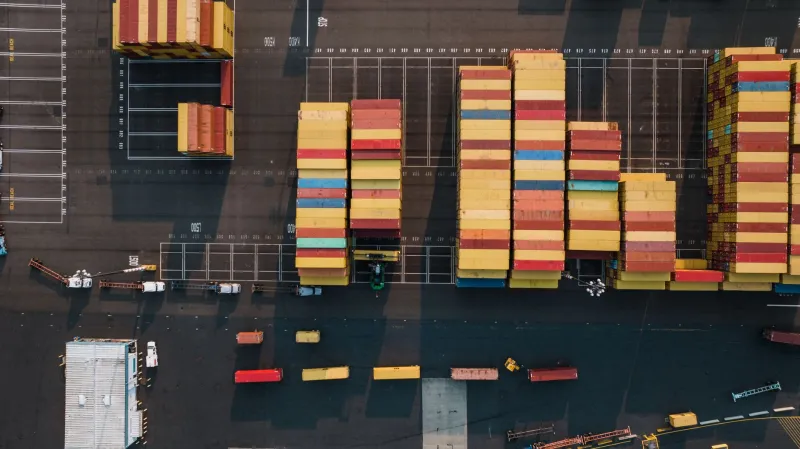
Global supply chains have rarely been under greater scrutiny. The disruptions of recent years — pandemic-era bottlenecks, shifting trade alignments, and mounting geopolitical uncertainty across East Asia — have compelled Japanese manufacturers and logistics operators to fundamentally reconsider how they move goods around the world. Increasingly, the answer is running through Australia.
Australian ports, once regarded primarily as export terminals for bulk commodities, are being repositioned as sophisticated, multi-purpose logistics hubs capable of servicing the complex demands of Japanese industrial supply chains. The shift is gradual but unmistakable, and for Australian port operators and freight companies, it represents one of the more consequential commercial opportunities to emerge from the bilateral relationship in a generation.
The Geopolitical Tailwind
To understand why Japanese companies are looking south, it helps to appreciate the pressures they face at home. Japan's exposure to single-corridor logistics routes — particularly those threading through the South China Sea and key Southeast Asian chokepoints — has become a source of strategic vulnerability that corporate boards and government planners can no longer afford to overlook.
Australia's appeal in this context is not merely geographic, though geography matters. The country's ports sit outside the most contested maritime corridors, operate under transparent regulatory frameworks, and benefit from an alliance architecture that Japanese trading houses regard as a meaningful risk mitigant. When Japanese logistics executives speak privately about supply chain diversification, Australia's stability features prominently in their assessments.
The Australia-Japan Economic Partnership Agreement, now well into its operational phase, provides the commercial scaffolding that makes deeper logistics integration practical. Reduced tariff friction and streamlined customs arrangements have lowered the cost of routing goods through Australian terminals, making what was once a theoretical advantage increasingly concrete.
Infrastructure Fit for Purpose
Geopolitical tailwinds only carry freight so far. What has genuinely accelerated Japanese interest is the visible transformation of Australian port infrastructure over the past several years.
The Port of Brisbane has invested substantially in container terminal capacity and cold-chain logistics facilities, making it a more credible gateway for time-sensitive Japanese cargo including automotive components, electronics, and pharmaceutical products. Fremantle's ongoing expansion positions Western Australia as a natural pivot point for goods moving between Japanese manufacturers and markets across the Indian Ocean rim, including South Asia and East Africa — regions of growing importance to Japanese trading companies.
Melbourne's Webb Dock precinct has similarly attracted attention from Japanese freight forwarders, particularly those managing complex, multi-leg supply chains that require reliable transshipment capability. The port's rail connectivity and proximity to major distribution infrastructure reduce the dwell time that erodes margin in high-frequency logistics operations.
For Japanese companies accustomed to the precision and reliability of domestic logistics — Japan's own ports and rail networks are among the world's most efficient — the standard of Australian infrastructure has historically been a sticking point. The gap has narrowed. Investment in port technology, including automated container handling systems and advanced vessel scheduling platforms, has lifted Australian terminal performance to levels that Japanese logistics managers now regard as operationally credible.
Case Studies in Restructuring
Several Japanese companies have moved beyond assessment and into active restructuring of their Asia-Pacific logistics through Australian nodes.
One prominent example involves a major Japanese automotive components manufacturer that shifted a portion of its Oceania and South Asian distribution through the Port of Brisbane following supply chain reviews conducted in the aftermath of pandemic disruptions. The company cited the port's improving turnaround times, the reliability of Australian customs processing, and the availability of bonded warehousing as decisive factors. The Brisbane routing has since been extended to cover additional product lines.
In the resources sector, a Japanese trading house with significant exposure to Australian iron ore and agricultural exports has begun integrating its return freight flows more deliberately, using vessels that previously returned to Japan partially laden to carry manufactured goods into Australian distribution networks. This bidirectional optimisation — essentially treating Australian ports as nodes in a circular logistics model rather than one-way export terminals — is a relatively recent development that reflects growing operational sophistication on both sides.
Australian logistics companies have been active participants in this restructuring. Several mid-tier freight operators have established dedicated Japan desks and Japanese-language client services, recognising that cultural fluency is as important as operational capability when building trust with Japanese partners. The investment in relationship infrastructure — not merely physical infrastructure — has paid dividends.
Competitive Advantages Worth Naming
When Australian port operators and logistics companies pitch to Japanese counterparts, several advantages recur consistently.
First, Australia's position as a reliable supplier of raw materials gives it a natural freight base that supports the economics of container shipping routes. Ships that arrive full of Japanese manufactured goods can depart full of Australian resources, creating the bilateral freight symmetry that makes routes commercially sustainable for carriers.
Second, Australia's English-language legal and regulatory environment, while occasionally a cultural adjustment for Japanese partners, offers transparency and predictability that are valued in long-term infrastructure relationships. Dispute resolution mechanisms are well understood, and investment frameworks are stable.
Third, Australia's time zone positioning — sitting between Japan and key markets in the Middle East, Europe, and the Americas — gives it a genuine geographic logic as a transshipment and consolidation hub that is sometimes underappreciated in conventional routing analyses.
The Road Ahead
The opportunity is real, but so are the challenges. Australian ports continue to face criticism over labour relations, with industrial disputes periodically disrupting operations in ways that damage the country's reputation for reliability among international shipping clients. Japanese logistics executives are well aware of this history, and Australian port operators will need to demonstrate sustained operational consistency if they are to convert interest into long-term commitment.
Investment in digital integration — enabling Japanese manufacturers to track cargo in real time through Australian terminal systems — is another area where progress has been made but more is needed. Japanese supply chain managers operate in environments of exceptional data granularity, and Australian logistics providers that can match that standard will hold a meaningful competitive advantage.
For the bilateral relationship more broadly, the deepening of logistics ties carries significance beyond the commercial. Infrastructure partnerships create durable economic interdependencies. When Japanese companies route their supply chains through Australian ports, they acquire a practical stake in Australian infrastructure quality and stability. That alignment of interests is precisely the kind of structural bond that sustains bilateral relationships through periods of diplomatic or economic turbulence.
Australia's ports have long been the country's economic front door. The question now is whether they can become a preferred gateway for one of the world's most demanding and valuable trading partners. The foundations are in place. The work of building on them has begun.