Precision Over Price: Why Australian Manufacturers Are Planting Flags in Japan
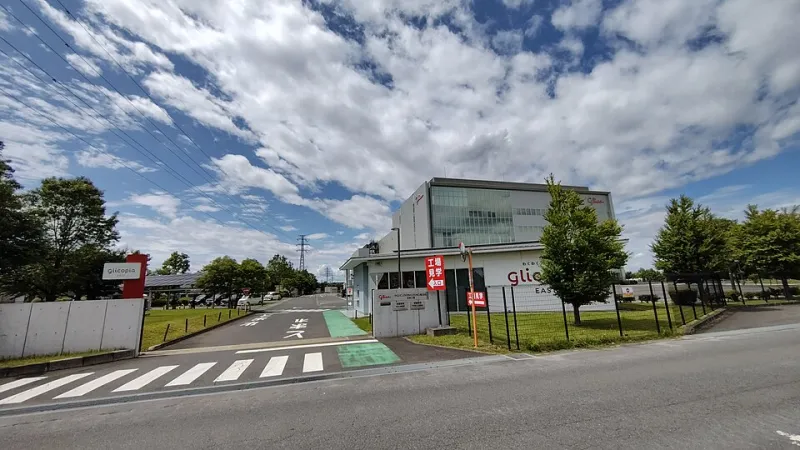
Photo: Miyuki Meinaka, CC BY-SA 4.0, via Wikimedia Commons
For decades, the dominant logic of global manufacturing pointed south and west — towards lower labour costs, looser regulatory environments, and the economies of scale that Southeast Asia and China promised. Australian manufacturers followed that current dutifully. Now, a quieter but increasingly significant counter-movement is underway, and its destination is Japan.
This is not a story about cheap inputs. It is a story about capability, credibility, and competitive positioning in one of the world's most sophisticated industrial ecosystems.
A Different Kind of Competitive Advantage
The manufacturers making moves into Japan are not chasing wage arbitrage. They are chasing something harder to quantify but far more durable: access to world-class automation infrastructure, a technically skilled and highly disciplined workforce, and a geographical position that places them within striking distance of South Korea, Taiwan, and mainland China's industrial heartland.
Japan consistently ranks among the top nations globally for manufacturing value-add per worker, and its robotics density — the number of industrial robots per 10,000 employees — is among the highest on the planet. For Australian companies producing precision components, medical devices, advanced materials, or specialised food processing equipment, a Japanese production partnership or satellite facility offers something no cost-cutting exercise in a cheaper market ever could: a quality signal that opens doors.
"When you manufacture in Japan, or manufacture with a Japanese partner, the market reads that as a statement of intent," says one Melbourne-based industrial equipment exporter who established a joint venture in Aichi Prefecture three years ago. "Our clients in South Korea and Singapore started taking us more seriously almost immediately."
Case Studies in Strategic Relocation
The movement is not monolithic. Australian manufacturers are approaching Japan through several distinct models, each suited to different scales and risk appetites.
The Joint Venture Model remains the most common entry point. A mid-sized Queensland agricultural machinery manufacturer recently entered a formal co-production arrangement with a Nagano-based precision engineering firm, allowing it to integrate Japanese CNC machining capabilities into its product line while sharing intellectual property under a carefully structured bilateral agreement. The arrangement reduced the Australian company's per-unit defect rate by 34 per cent within the first production cycle.
The Satellite Facility Model is gaining traction among companies with sufficient capital and a longer-term horizon. A Western Australian advanced materials firm opened a modest but strategically positioned R&D and light manufacturing facility in Kawasaki's industrial zone in 2022, primarily to tap into proximity to Japanese automotive and aerospace customers. The facility employs a small local team and serves as both a production node and a market intelligence outpost.
The Contract Manufacturing Model — engaging established Japanese manufacturers to produce components or finished goods under an Australian brand's specification — offers the lowest barrier to entry and has seen uptake from several smaller Australian firms in the food technology and medical consumables sectors.
The Numbers Behind the Decision
The cost-benefit analysis of Japanese operations is more nuanced than critics of the strategy typically acknowledge. Yes, Japanese labour costs exceed those in Southeast Asia by a considerable margin. Commercial real estate in industrial corridors around Osaka or Nagoya is not inexpensive. And the regulatory environment, while transparent and consistent, demands rigorous compliance.
However, when Australian manufacturers factor in total landed cost — including quality control failures, supply chain disruptions, logistics complexity, and the reputational cost of inconsistent output — the Japanese model often compares favourably over a five-to-seven year horizon. The COVID-19 pandemic, which exposed catastrophic vulnerabilities in extended, low-cost supply chains, accelerated this recalculation for many Australian boardrooms.
There is also the matter of government support. The Australian Government's Export Finance Australia (EFA) has broadened its mandate to support offshore manufacturing investments that strengthen Australian export capability. On the Japanese side, the Japan External Trade Organisation (JETRO) operates a well-resourced program specifically designed to attract foreign manufacturers, including subsidised office space, regulatory navigation assistance, and introductions to potential local partners. Several Australian state governments have also formalised trade and investment relationships with Japanese prefectures, creating additional channels for facilitated entry.
Cultural Readiness as a Business Prerequisite
The manufacturers succeeding in Japan share one characteristic that no government incentive can replicate: cultural preparedness. Japanese business culture places extraordinary weight on relationship-building, process discipline, and the concept of kaizen — continuous incremental improvement. Australian companies accustomed to faster, more transactional business rhythms often find the initial pace of Japanese partnership development frustrating.
Those who persist, however, describe the investment as transformative. The same Queensland agricultural machinery company noted that its Japanese joint venture partner's insistence on exhaustive pre-production planning — a process that took nearly eight months before the first component was manufactured — ultimately saved the partnership from three separate design flaws that would have been costly to rectify post-launch.
Engaging a bilingual business adviser or engaging with networks such as the Australia-Japan Business Co-operation Committee (AJBCC) before committing to any structural arrangement is considered best practice by virtually every Australian operator with Japanese manufacturing experience.
The Bigger Picture
Australia and Japan share a bilateral relationship grounded in the 1957 Commerce Agreement — one of Australia's earliest and most enduring trade partnerships. The more recent Australia-Japan Economic Partnership Agreement (JAEPA), in force since 2015, continues to reduce barriers for goods, services, and investment flows between the two nations.
Within that framework, the current wave of Australian manufacturing interest in Japan represents something more than opportunism. It reflects a maturing understanding that competitive advantage in global manufacturing is no longer purely a function of cost. In an era defined by supply chain resilience, quality premiums, and the growing importance of trusted provenance, Japan offers Australian manufacturers a platform that few other markets can match.
For those willing to commit to the relationship — in the full, long-term sense that Japanese business culture demands — the return on that investment is proving to be substantial.